
If you’ve inherited a house with siblings or other family members, you probably already know that getting everyone to agree isn’t always easy.
One person wants to sell. Another wants to keep the family home. Someone else thinks the asking price is too low. Before long, what should be a relatively straightforward real estate decision becomes a family dispute.
As a Miami Realtor, Certified Probate Specialist, and author of Navigating Probate for Families, I believe it’s important to understand not only what the law may allow, but also how to work through the disagreements that can arise along the way.
And sometimes those disagreements have very little to do with the house itself.
What’s the Difference Between an Executor and a Personal Representative?
In Florida, the person appointed by the court to handle an estate is called the personal representative, or PR. Other states commonly use the term executor.
The personal representative is responsible for managing the estate, paying legitimate debts and expenses, and making sure the remaining assets are distributed according to the will or Florida law.
That’s a considerable responsibility, and it comes with meaningful authority. But it doesn’t mean the personal representative can simply do whatever they want.
Their responsibility is to properly administer the estate and fulfill their legal obligations. They don’t necessarily need to make every beneficiary happy, but they do need to follow the law.
Whether a personal representative can sell a house without everyone’s approval depends largely on how the property is owned, what the will says, and whether the property is actually part of the estate the personal representative has authority to manage.
When Can a Personal Representative Sell Without Beneficiary Approval?
There isn’t one answer that applies to every Florida estate. The personal representative’s authority can depend on several factors.
When the Will Gives the Personal Representative Authority to Sell
Florida law can allow a personal representative to sell property that is part of the estate without obtaining approval from every beneficiary when the personal representative has the necessary authority.
In many situations, court approval may not be required either.
That doesn’t mean beneficiaries have no rights. If someone believes the personal representative is mishandling the estate, failing to follow the will, or acting improperly, they can raise those concerns through the probate court.
But simply disagreeing with the decision to sell does not automatically give a beneficiary the power to stop the sale.
When There’s No Will or No Authority to Sell
What happens if the person died without a will, or the will doesn’t give the personal representative sufficient authority to sell the property?
A sale may still be possible, but court involvement may be necessary before ownership can be transferred to a buyer.
This is one reason I encourage families to involve their probate attorney early in the process.
It’s much better to determine who has the authority to sell before putting the house on the market than to discover a problem after you’ve accepted an offer.
What if the House Is Protected Homestead?
Florida’s homestead laws deserve special attention.
A deceased person’s primary residence may qualify as protected homestead. Depending on the circumstances, ownership may pass directly to a surviving spouse or heirs rather than remaining part of the probate estate under the personal representative’s control.
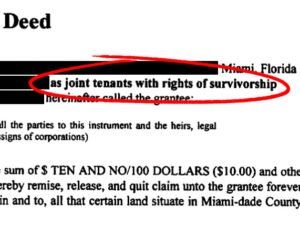
For example, if a married couple owned their home together as tenants by the entirety, the surviving spouse generally becomes the sole owner automatically.
If the deceased owned the home individually, the rights of a surviving spouse and children can depend on the specific circumstances.
The important point is that a personal representative generally cannot sell protected homestead simply because they believe selling would be best for the estate.
Before an inherited home is listed, the probate attorney should confirm who owns the property, whether homestead protections apply, and who has the legal authority to sell.
Why Do Beneficiaries Disagree About Selling an Inherited House?
You might assume most disagreements are about money.
Sometimes they are.
But there’s often much more going on.
One beneficiary may have a strong emotional attachment to the home. Maybe they grew up there or spent years helping their parents maintain it.
Another person may need their inheritance to pay bills, purchase another home, or simply move forward financially.
Someone else may believe the property will increase in value and would rather keep it as an investment.
And sometimes, quite simply, family members don’t trust one another.
Those differences can lead to disagreements over:
- Whether to sell the property or keep it
- What the house is actually worth
- Whether repairs should be completed before selling
- Who should pay the mortgage, taxes, insurance, and maintenance
- Whether one beneficiary should buy out the others
- How quickly the property should be sold
I think one of the most important things a Realtor can do in these situations is understand what everyone is actually trying to accomplish.
Why does one person want to sell immediately? Why is another so hesitant? What does each person expect to happen after the property is sold?
Understanding those motivations can sometimes change the entire conversation.
What a Court-Supervised Sale Taught Me About Family Disagreements
I’m currently working on a court-supervised divorce property sale.
Divorce and probate are obviously different legal situations, but the challenges of dealing with people who disagree over a property can be remarkably similar.
One of the biggest things I’ve learned is how high tensions can run.
Something you say may be heard or interpreted completely differently by someone else. You may believe you’re having a perfectly reasonable conversation while the other person hears something entirely different.
People aren’t necessarily approaching the situation from the same emotional place.
I’ve seen how even relatively simple communications can throw a transaction off course. A misunderstanding, a poorly worded message, or an assumption about someone’s intentions can create problems that weren’t there to begin with.
And then there are situations where the parties simply cannot agree.
As the Realtor, my responsibility is to remain neutral, communicate clearly, and help everyone understand the real estate options available to them. I’m not there to decide who’s right or take sides.
There’s also something interesting I’ve noticed when it comes to the money.
A disagreement over $20,000 or $30,000 can sound enormous when everyone is focused on the total sales price.
But if the proceeds are being divided among three, four, or five beneficiaries, the actual difference to each person may be considerably smaller.
I’m certainly not suggesting anyone should discount the value of their inheritance. Every dollar matters.
But sometimes showing people what the disagreement actually means to each individual, rather than focusing only on the total amount, helps put the decision into perspective.
Example: Three Siblings Who Can’t Agree About Their Parents’ House
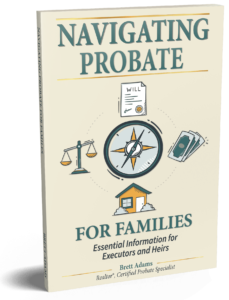
In my book, Navigating Probate for Families, I share an illustrative case study called “Turning Disagreements Into Agreement.”
Three siblings inherit their parents’ home, a property filled with decades of family memories.
One wants to keep the house and live in it. Another wants to sell immediately and receive their inheritance. The third is caught somewhere in the middle.
After weeks of disagreement, they agree to bring in a mediator.
The mediator suggests having the property professionally appraised so everyone has a reasonable starting point for discussing its value.
Eventually, the sibling who wants to keep the house arranges financing and buys out the other two.
Everyone is able to move forward without putting the property on the open market.
It’s a good example of something I believe strongly: disagreement doesn’t necessarily mean there isn’t a solution.
Sometimes the family simply needs a different approach.
Can One Beneficiary Buy Out the Others Instead?
Absolutely.
In fact, I think a buyout is an option worth exploring before a family assumes selling the house is the only solution.
If one sibling wants to keep the property and the others want their share of the money, a buyout may satisfy everyone’s goals.
The challenge is usually agreeing on what the house is worth.
I’d generally start with an independent appraisal. If there’s a substantial disagreement over value, getting two or even three appraisals may be worthwhile.
Why more than one?
Because an appraisal is still a professional opinion of value, not an exact science. Two qualified appraisers can arrive at different numbers, particularly with unusual properties or homes that need significant work.
Having several opinions can sometimes help everyone settle on a value they believe is reasonable.
Naturally, the person buying the property also needs the cash or financing to complete the purchase.
And if the property is still involved in probate, the attorney should make sure the transaction is structured and handled properly.
It may take some additional effort, but a buyout can be well worth considering if it prevents a prolonged family dispute.
What Happens When One Beneficiary Refuses to Agree?
There’s only so much talking anyone can do.
You try to understand everyone’s position, explain the options, and find some common ground. Sometimes having a separate conversation with one person and then clearly explaining their position to another can resolve a misunderstanding.
But eventually, you may reach a point where nobody is willing to budge.
That’s when I believe the Realtor needs to recognize that the disagreement has moved beyond what we can reasonably resolve.
We can explain market conditions, help establish a realistic selling price, prepare estimates of selling expenses, and show everyone what they may actually receive from a sale.
What we can’t do is make legal decisions for the parties.
If the beneficiaries reach a genuine stalemate, it’s time for the probate attorney to determine the next step.
Depending on the circumstances, that may mean asking the court for instructions or approval to proceed.
If the heirs already own the property together, a separate legal process called a partition action may also be available. A partition action allows a co-owner to ask the court to divide the property or, when appropriate, order its sale.
Nobody particularly wants to go down that road. Court proceedings can be stressful, expensive, and time-consuming.
But sometimes having a judge determine the next course of action is what finally allows everyone to move forward.
Does Keeping an Inherited House Really Make Sense?
It’s easy to say, “Let’s just keep the house.”
But keeping an inherited property comes with responsibilities that don’t disappear simply because nobody wants to sell.
Someone still has to deal with:
- Property taxes and homeowners insurance
- Mortgage payments, if there’s still a loan
- Routine maintenance and unexpected repairs
- Major expenses such as replacing a roof or air conditioner
- Finding tenants and collecting rent if the house becomes a rental
- Deciding who pays for improvements
- Deciding how future decisions will be made
Now imagine managing all of that with four siblings who have different financial situations, opinions, and expectations.
What happens when the air conditioner breaks and one person doesn’t want to contribute?
Who decides whether the house should be rented?
What happens if one sibling wants to renovate while another doesn’t want to spend anything?
You can see how things can become complicated very quickly.
That’s why I believe selling is sometimes the most practical solution, even when it wasn’t everyone’s first choice.
Selling allows each beneficiary to receive their share of the proceeds and make their own financial decisions without remaining tied to a property they may not want to manage.
Of course, keeping the house can make perfect sense if everyone agrees on the responsibilities and has a realistic plan for the future.
The important thing is to think through those responsibilities before deciding that keeping the property is automatically the better choice.
My Advice to a Personal Representative Facing Family Disagreements
If you’re handling a Florida estate and beneficiaries are disagreeing about what should happen to a house, here’s how I’d approach it.
- Talk to the probate attorney first. Find out who owns the property, whether homestead protections apply, and what authority you have to sell.
- Understand everyone’s motivations. Someone’s reluctance to sell may have more to do with memories, finances, or uncertainty than with the house itself.
- Establish a realistic value. Work with an experienced local Realtor and consider an independent appraisal if value is a major sticking point.
- Show everyone the actual numbers. A seller’s net sheet can help beneficiaries understand what may remain after commissions, closing costs, mortgages, taxes, and other expenses.
- Consider alternatives. A buyout or giving one beneficiary additional time to arrange financing may solve the problem without an open-market sale.
- Keep communication clear. Be careful with assumptions, particularly when emotions are running high. It’s remarkable how easily something can be misunderstood.
- Know when it’s time to involve the attorneys or court. If everyone has reached an impasse, let the legal professionals determine what needs to happen next.
Above all, remember that the personal representative’s responsibility is to properly administer the estate, not to make every beneficiary happy.
That doesn’t mean ignoring anyone’s concerns. Quite the opposite. I think listening carefully and understanding everyone’s position should always come first.
But if the reasonable alternatives have been exhausted and the personal representative has the legal authority to proceed, one person’s disagreement doesn’t necessarily have to prevent the sale.
The Bottom Line: Is Everyone’s Agreement Required?
So, can an executor sell a house without all beneficiaries agreeing?
In Florida, yes, in many situations, provided the personal representative has the legal authority to sell the property.
The will, the property’s ownership, Florida homestead protections, and any required court approval will determine how the sale can proceed.
But beyond the legal side, I think the best approach is to understand why people disagree in the first place.
Sometimes the disagreement can be resolved simply by showing everyone the numbers. In other situations, a buyout may solve the problem. And occasionally, despite everyone’s best efforts, the court may need to determine what happens next.
There’s rarely anything easy about settling an estate, especially when family members have different ideas about what should happen to a home they’ve inherited.
As a Miami and South Florida Realtor and Certified Probate Specialist, my goal is to help families understand the real estate side of their options, communicate clearly, and make informed decisions about inherited property.
If you’re dealing with an inherited house in Miami-Dade or South Florida and aren’t sure what to do next, I’m happy to help you understand the real estate side of the process. You can learn more on my Miami Probate Realtor page, where you’ll also find a free copy of my book, Navigating Probate for Families.
This article provides general information about Florida probate real estate and isn’t intended as legal advice. Every estate is different, and a Florida probate attorney should review the circumstances before a property is sold.