A lot of families assume that because Mom or Dad passed away and left them the house, probate automatically has to happen before they can sell it.
That isn’t always true.
One of the biggest reasons for the confusion is that the family may not have been involved when the estate planning was set up. They may see a trust, survivorship language, or another ownership arrangement on a deed and have no idea what it actually means.
That’s why I always say to start with the deed.
Start With the Deed
The first thing I would do is go to the county clerk or official records website and look for the most recent deed.
You’re trying to figure out, to the best of your ability, who currently owns the property and how it’s titled.
The deed might show that:
- The property is owned by a trust.
- Another owner holds title with Joint Tenants with Right of Survivorship, or JTRS.
- A married couple owned the property as tenants by the entirety.
- An enhanced life estate deed, commonly called a Lady Bird deed, was recorded.
- Some or all of the ownership interest was previously quit-claimed to someone else.
If you find something like that, ownership may already have changed hands, in whole or in part, without the property needing to go through probate the way the family expected.
That doesn’t mean you should look at the deed, make your own legal interpretation, and immediately put the home on the market.
The public records are a starting point.
A probate attorney or qualified title professional should confirm who actually owns the property and who has the authority to sell it.
But checking the deed first can give you a much clearer idea of what you’re dealing with.
Some Florida Property Passes Outside Probate
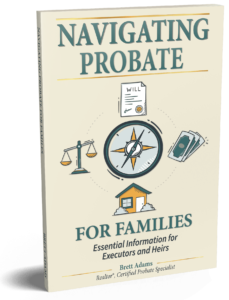
In Navigating Probate for Families, I explain that not every asset has to go through probate.
Real estate can be set up in different ways, and the way title is held can make a big difference after someone passes away.
For example, property held in a living trust generally stays under the trust instead of going through probate.
With Joint Tenants with Right of Survivorship, the deceased owner’s interest can pass automatically to the surviving owner.
If you co-own a rental or vacation property, I explain why survivorship wording on the deed matters.
Florida married couples may also own property as tenants by the entirety, which generally allows ownership to pass to the surviving spouse.
A Lady Bird deed is another estate-planning tool commonly used in Florida that can allow property to pass to named beneficiaries after the owner’s death without going through probate for that property.
The important thing to understand is that these arrangements were usually put in place before the owner passed away.
The surviving family may have had nothing to do with setting them up.
So they may assume, “Mom left us the house, so now we need probate,” when the deed may tell a very different story.
When Probate Is Necessary
If the deceased person owned the property individually and there isn’t a trust, survivorship provision, or another valid way for ownership to pass outside probate, probate may be necessary.
This is also where people can get tripped up by the word “inherited.”
Someone may say, “I inherited my father’s house,” when what they really mean is that their father passed away and they expect to receive the house.
Those aren’t always the same thing legally.
I’ve heard of children assuming they automatically had the right to sell a parent’s property simply because they were the children.
But being the son or daughter doesn’t automatically give someone the authority to sign a listing agreement or sell the home.
There may be a will naming a personal representative, what many people still call the executor. If probate is required, that personal representative may be the person who has the authority to act for the estate.
That authority matters even more when family members don’t agree on selling. I cover that in Can an Executor Sell a House Without All Beneficiaries Agreeing?
And this is another important distinction: probate doesn’t necessarily have to be completely finished before the house can be sold.
Once the proper authority has been established, a sale may be able to move forward while probate is still underway, depending on the will and whether court approval is required.
I explain how that works in Can You Sell a House Before Probate Is Complete in Florida?
My Role When Real Estate Is Involved
As a Realtor and Certified Probate Specialist, my job is to help identify who appears to have the right to sell the property and then work with the probate attorney and title professionals to get that confirmed.
From there, my goal is simple: take as much of the real estate burden off the personal representative and the family as possible.
That can include helping coordinate:
- Cleaning out and clearing the house
- Lawn care and basic maintenance
- Property condition and market value
- Preparing the home for sale
- Marketing and showings
- Communication with the attorney or court when needed
The probate attorney handles the legal side, including interpreting the will, making the court filings, and determining what the estate legally needs to do.
Everyone has a role, and the process works a lot better when those roles are clear.
The Bottom Line
Don’t assume probate is required just because someone passed away and left real estate behind.
Start with the deed.
See how the property is titled and whether ownership may already have changed hands through a trust, survivorship rights, a prior deed, or another estate-planning tool.
Then have the ownership and authority to sell confirmed by the right professionals.
You may find out the ownership issue was already handled years ago, and probate isn’t needed for the property at all.
If you’re dealing with an inherited property in Miami-Dade or South Florida and aren’t sure whether probate is needed, I’m happy to help with the real estate side. You can learn more on my Miami Probate Realtor page, where you’ll also find a free copy of my book.